
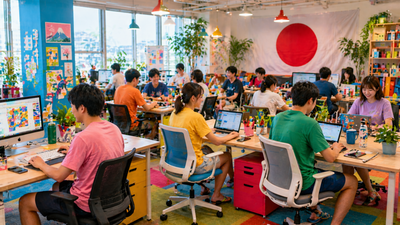
The corporate world rarely loosens its grip on formals, think crisp linen shirts, sharp tailoring, and neatly put-together office wear. But Tokyo’s workforce may have found an escape. In a bid to beat the heat and cut back on electricity use, the metropolitan government is now letting its employees clock in wearing shorts, as rising energy costs linked to the Middle East war add pressure to conserve power this summer.The decision comes as part of the country’s “Cool Biz” programme, an energy-saving drive introduced by Japan’s environment ministry, back in 2005. The campaign had initially focused on encouraging lighter office wear, asking staff to drop formal jackets and ties during the hotter months, with some even choosing Okinawan-style collared T-shirts.Officials said the latest revision, rolled out this month, goes further by loosening dress norms to include shorts. A Tokyo official, speaking on condition of anonymity, said an anticipated energy crunch tied to the Middle East war is “one of the factors” behind the move.Images carried by local media earlier this week showed the policy already taking effect, with some male staff at metropolitan offices seen in T-shirts and shorts.Governor Yuriko Koike, who had championed the original Cool Biz initiative during her tenure as environment minister, has thrown her weight behind the updated measures.Addressing reporters earlier this month, she said, “we encourage ‘cool’ attire that prioritises comfort, including polo shirts, T-shirts and sneakers and — depending on job responsibilities — shorts,” while warning of “a severe outlook for the supply and demand of electricity”.Koike also said the initiative would extend beyond clothing choices, with greater emphasis on teleworking and earlier office hours.The measures come as Japan faces increasingly harsh summers. The Japan Meteorological Agency recorded last year as the hottest since records began in 1898. With temperatures frequently hitting 40°C or higher, the agency last week introduced a formal classification for such conditions, calling them “cruelly hot” or “kokusho” days.Even before Japan’s move, Thailand had rolled out its own set of energy-saving measures for government workers, encouraging them to take the stairs instead of lifts, opt for short-sleeved shirts over formal suits, and work from home where possible. Offices were also instructed to keep air conditioning between 26–27°C, while ensuring lights and electronic devices are switched off when not in use.Meanwhile, the Middle East war has continued to escalate, now inching closer towards its 2 month mark. The conflict began back on February 28, when the US and Israel launched joint strikes on Iran.
