

Mumbai: Banking data for the fortnight ended April 15, 2026 showed a sharp contraction in deposits and advances after a surge at the March 31 year-end, highlighting the scale of balance sheet adjustments and exposing the window dressing in the system. Bank deposits fell from Rs 267.8 lakh crore on March 31 to Rs 261.9 lakh crore by April 15, a contraction of 2.2%, while advances declined from Rs 218.8 lakh crore to Rs 214.3 lakh crore, a drop of 2.1%. The combined reduction of around Rs 10.5 lakh crore across both sides of bank balance sheets within a fortnight points to a significant portion of March-end balances being temporary in nature.
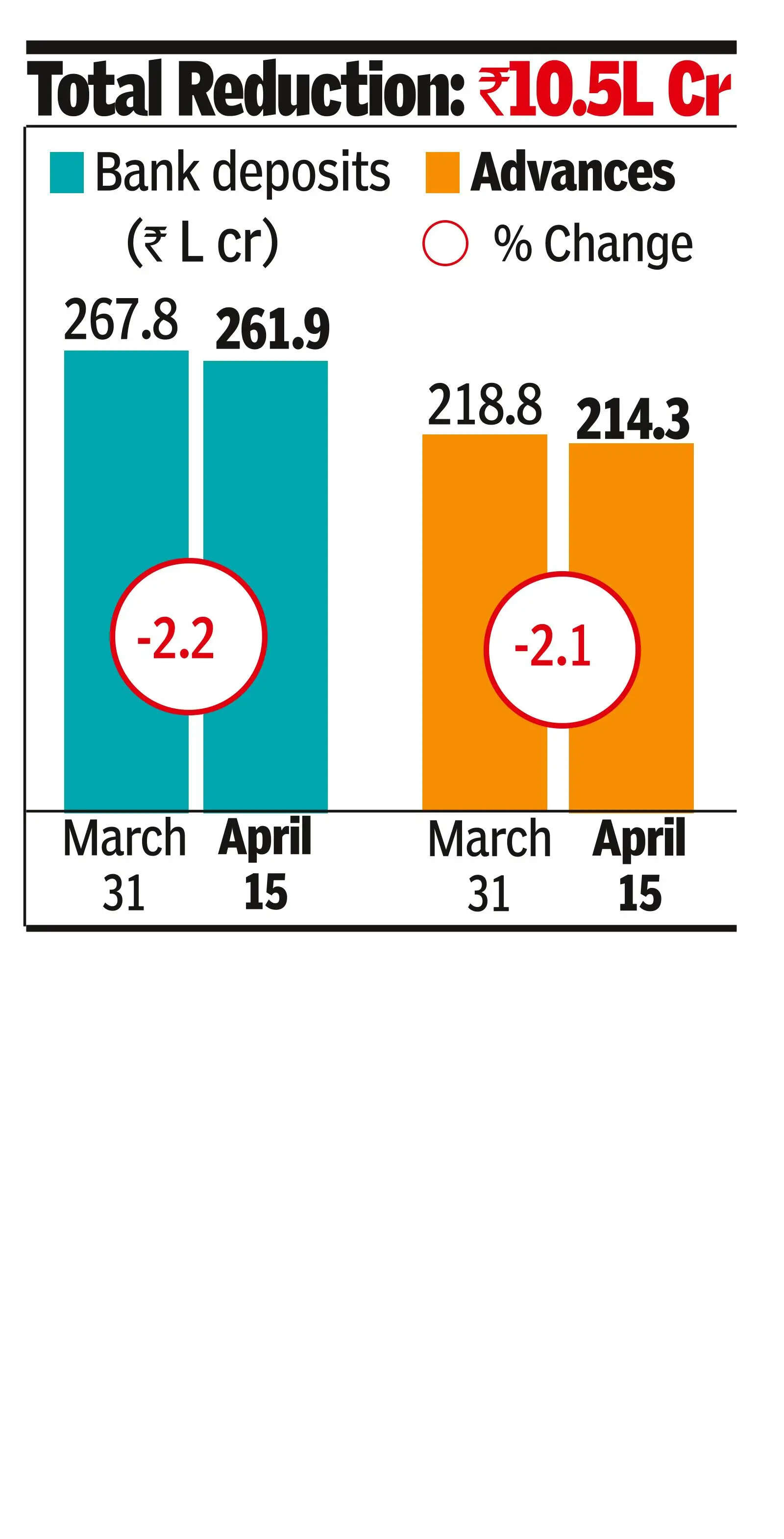
Total reduction: Rs 10.5 lakh crore
The data indicates that a part of the March 31 spike reflected transitory adjustments rather than underlying business growth. Year-on-year growth remains firm, with deposits up 12.1% and advances rising 14.9%. The sequential decline after March 31 shows that the year-end peak was not sustained, and the latest data provides a clearer view of underlying trends after the effect of short-term balance sheet adjustments. The shift to a fixed March 31st reporting date has brought this pattern into sharper focus by aligning disclosures with the fiscal year-end. Earlier, RBI followed a reporting cycle based on alternate Fridays, which allowed a gap between the last reporting date and the financial year-end. Banks window dress businesses by mobilising short-term deposits from corporate clients and pushing large credit disbursements in the final days of the financial year to meet targets and regulatory ratios. Typically, these positions are reversed after March 31 once reporting is completed, with short-term loans repaid and corporate funds moving out for tax payments or redeployment, contributing to the decline seen by mid-April. The credit-deposit ratio rose marginally from 81.7% to 81.8% during this period. This suggests banks relied more on temporary deposit mobilisation than on incremental lending at the year-end.
