
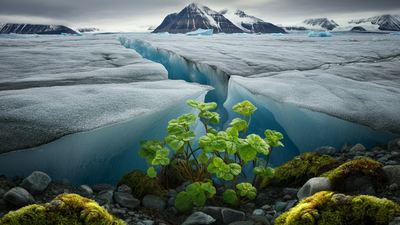
With the melting of Arctic ice on the eastern side of Baffin Island in Canada’s Arctic, scientists are uncovering ancient tundra plants that remained buried beneath ice for more than 40,000 years.According to a study published in Nature Communications, researchers collected 48 tundra plant samples from the edges of 30 ice caps on eastern Baffin Island. Radiocarbon dating showed that the plants ranged in age from about 40,000 to more than 50,000 years. Crucially, the plants were found in situ, meaning they were preserved exactly in their original position.Plants preserved where they once grewNot only the age of the plants, but also their placement is significant in this case. Reportedly, the plants had not been moved there through wind or water erosion but rather stayed put in their original environment until the ice receded to uncover them.The samples were obtained from within about one metre of current ice boundaries, a place in which minor changes in melting could bring to light objects hidden underground for tens of thousands of years. This reinforces the hypothesis that the plants were buried when the ice advanced in the late Ice Age and stayed underneath stable ice coverage for a very long time.Moreover, the presence of such findings at various ice caps makes their discovery more believable. The researchers conducted replicated sampling at nine locations, including testing several strands of the same plant and several plants from the same site.Evidence backed by rock-surface testingAll of this being said, the team did not only resort to plant-based radiocarbon dating in their study. To confirm the history of ice cover, they also resorted to cosmogenic carbon-14 dating of rock surfaces near the sites at nine different locations.With these data, the scientists modeled the history of ice cover and found that all sites, except for one, were likely covered by ice continuously since the Holocene period, which started after the last major ice age about 11,700 years ago. According to the researchers, the combination of plant-based dating along with the rock-surface dating gave much better confirmation that the sites were covered by persistent ice and did not undergo the melting-refreezing cycle.
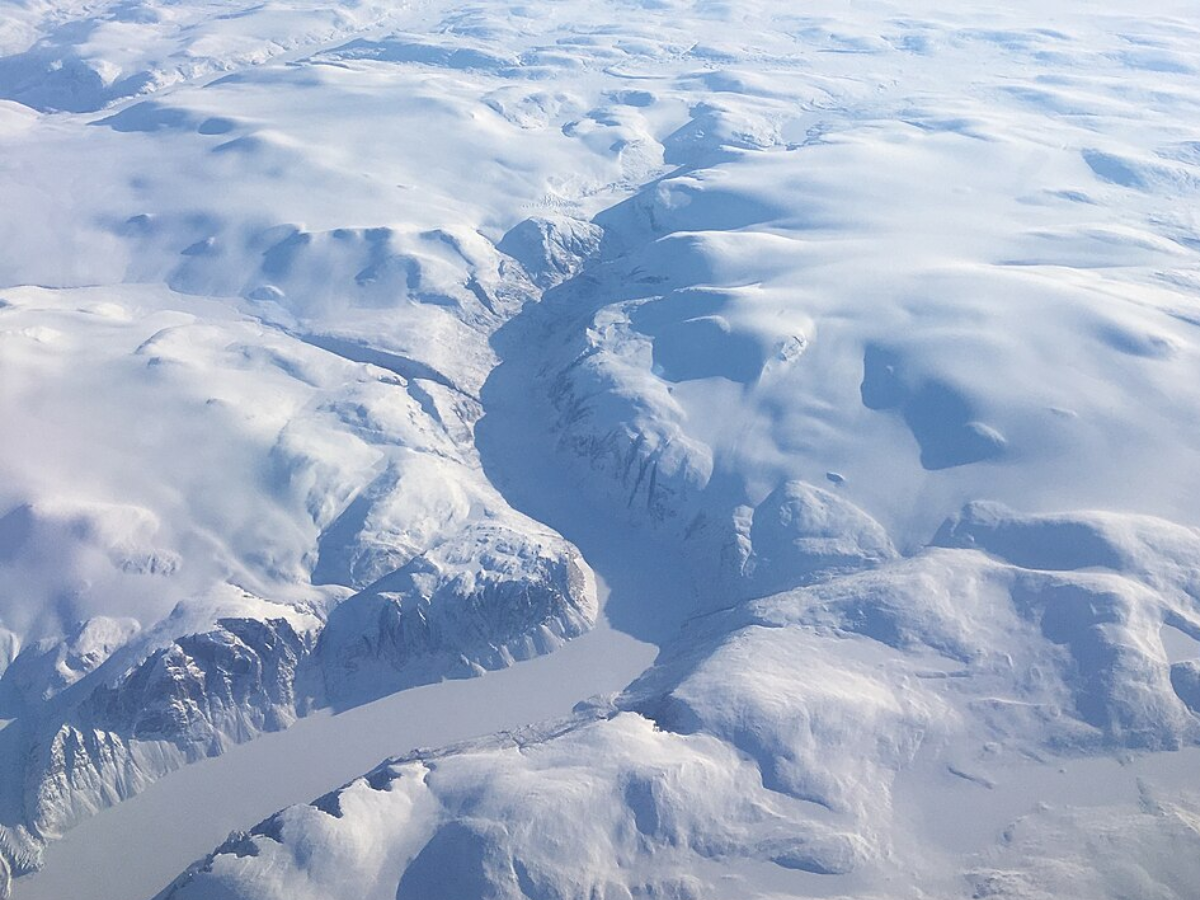
Image of Aerial view of Baffin Island| Image Credit: Wikimedia Commons
What the discovery reveals about Arctic historyIt seems that at least some of the ice caps of eastern Baffin Island served as an archive where plant specimens were preserved frozen within a stable cover of ice for many thousands of years. It is worth noting that the conclusion was made not about the whole of Baffin Island being covered by a single ice layer for 50,000 years. In other words, it relates specifically to local ice caps and their margins studied by scientists.Nevertheless, experts believe that the discovery is valuable since it proves that some Arctic ecosystems remained preserved within the ice layers throughout the warm periods, including the Holocene epoch, without adapting to the new climate conditions.As it turns out, some of the plants’ age even predates the Last Glacial Maximum, dating back to 26,000 years ago.A wider picture of climate change on Baffin IslandThe discovery also connects with broader climate research on Baffin Island. According to a study published in Proceedings of the National Academy of Sciences, ancient plant DNA preserved in lake sediments on Baffin Island revealed major vegetation shifts during earlier warm periods such as the Last Interglacial and the Holocene, highlighting how sensitive Arctic ecosystems are to climate change.The implication is that the island of Baffin has always been very susceptible to changes in the climate, with its flora constantly growing and shrinking depending on the climate changes.More recent studies carried out in the east central Baffin Island have also brought to light just how inaccessible the region still is, even amidst environmental changes.Ice retreat is exposing a hidden archiveWhile the melting of Arctic ice is usually considered in terms of its impact on sea levels and ecosystems, this kind of discovery points to yet another effect: geological and biological information from eras gone by is starting to become exposed due to the melt, having been encased in ice for eons past.These fossils from Baffin Island aren’t just impressive in age; they’re backed up by multiple lines of evidence. The plant radiocarbon dating, repeated sampling, and surface analysis of rocks all lead to the same conclusion: that this part of the Arctic was covered in ice for an extraordinarily long period of time.With the accelerated pace of warming in the Arctic, there’s hope that many more such relics of the Earth’s distant past will be discovered in the coming years.
