
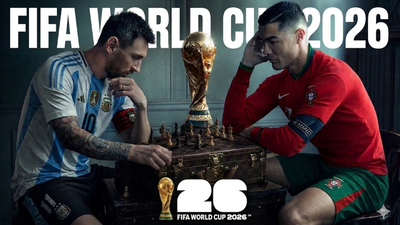
FIFA’s 2026 World Cup kicks off on June 11 in the United States, Canada and Mexico, and for the first time in the tournament’s history, YouTube is an official part of how the world will watch it, but for fans in India, that development may amount to very little, because without an official broadcaster to hold domestic rights and participate in the arrangement, geo-restrictions are likely to block most of the platform’s World Cup content from reaching Indian screens entirely. Hopes that Prasar Bharati could step in as a fallback option have also faded, after the broadcaster reportedly told the Delhi High Court it is not responsible for acquiring television rights for the 2026 FIFA World Cup in India, leaving the situation increasingly uncertain.
What the YouTube deal actually offers
In March 2026, FIFA announced what it called a “game-changing partnership” with YouTube, confirming that rights-holding broadcasters around the world would have the option to stream the opening ten minutes of every match live on their official YouTube channels, with the initiative designed to draw younger, digitally-native audiences toward the full broadcast. Beyond the ten-minute previews, broadcasters may also choose to stream a select number of matches in full on YouTube, though FIFA has been clear that this will vary by territory and is entirely at the discretion of individual rights holders rather than a guaranteed provision across all markets.
FILE – A YouTube sign is shown near the company’s headquarters in San Bruno, Calif., Wednesday, March 12, 2025. (AP Photo/Jeff Chiu, file)
Fans in the United States will have access to every match of the tournament live through YouTube TV, which holds rights in that market, while other official broadcasters, among them FOX Soccer, Telemundo Deportes, beIN Sports, SuperSport, JTBC and KBS, are expected to publish previews, highlights and potential full match streams through their own verified YouTube accounts. The official FIFA YouTube channel will additionally serve as a hub for highlights, archive footage, creator-led coverage and behind-the-scenes content throughout the tournament’s 104-match duration.
People stand in front of a FIFA highlight video board during a tour of a FIFA Museum exhibit at Science World in Vancouver, British Columbia, Wednesday, May 13, 2026, ahead of the 2026 FIFA World Cup soccer tournament. (Ethan Cairns/The Canadian Press via AP)
The critical limitation, however, is that all of this is tied to the regional rights structure. Content published by a broadcaster on YouTube is typically geo-restricted to the territory in which that broadcaster holds rights, which means that streams from American or European rights holders would not ordinarily be accessible to viewers here. Without a domestic broadcaster participating in the YouTube arrangement, there is no Indian channel through which any of that live content would flow, and the FIFA channel itself is not a substitute for the live match access that only a rights-holding broadcaster can provide on the platform. Without a domestic broadcaster participating in the YouTube arrangement, many fans may be pushed towards unofficial workarounds such as VPNs or piracy sites, or rely on informal online watch parties, none of which offer a stable or reliable viewing experience compared to official broadcasts.
Why India has no broadcaster
The reasons behind the deadlock are primarily commercial, and they have been accumulating for months. FIFA’s original asking price for the combined Indian media rights covering the 2026 and 2030 World Cups was reported to be in the region of USD 100 million, a figure that drew little serious interest from broadcasters already heavily committed to cricket and IPL rights that have consumed the bulk of sports broadcasting budgets in recent years. FIFA subsequently reduced its valuation to approximately USD 35 million after the market failed to respond, but even that figure did not produce a deal. The Reliance Industries and Disney joint venture JioStar submitted a bid of around USD 20 million, which FIFA rejected. The scheduling reality of a North American tournament has compounded the reluctance, with most matches expected to air during late-night and early-morning hours in India, a timing problem that makes the commercial case for expensive rights considerably harder to justify against projected viewership numbers.
Prasar Bharati’s exit
The most consequential recent development came when Prasar Bharati, told the Delhi High Court that acquiring the FIFA World Cup 2026 television rights is not its responsibility. The submission came in response to a petition seeking a free-to-air telecast of the tournament through the state broadcaster, an avenue that many had been watching as a potential last resort given the collapse of commercial negotiations. With Prasar Bharati having now formally distanced itself from any obligation to secure the rights, that option has closed, and the June 11 start date continues to approach without resolution.
Where things stand
As it stands, no broadcaster has officially finalised Indian media rights for the FIFA World Cup 2026, with weeks remaining before the tournament begins. FIFA has reduced its asking price substantially, the only significant commercial bid on record has been rejected, and the state broadcaster has told a court the matter is not its concern. The YouTube partnership that FIFA has positioned as a landmark moment for global digital football access will reach fans across dozens of territories through their respective rights holders, but with no official rights holder in place here, Indian football fans face the very real prospect of the largest World Cup in history arriving with no legal and straightforward route to watch any of it, unless broadcasters, FIFA, or the government move quickly to break a deadlock that has already gone on far too long.
