
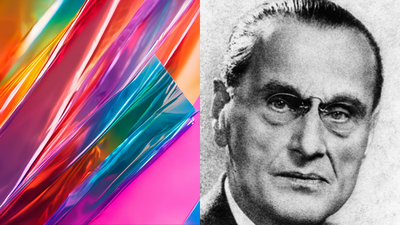
It all began in 1908 when a Swiss engineer and inventor, Jacques E. Brandenberger, saw a drink spill on a linen tablecloth in a restaurant. This inspired him to look for ways of making a waterproof material for coating fabrics. While he never succeeded in his quest for stain-proof cloth, he discovered something even greater: a flexible cellulose film known as Cellophane. Cellophane became widely used in the food and consumer goods industry due to its ability to protect packaged foods while at the same time giving consumers visibility. As a matter of fact, cellophane is one of the very first clear wraps ever created.
Who was the Swiss engineer Jacques E. Brandenberger
Jacques Brandenberger was a Swiss inventor who was born in 1872 and started his career by focusing on textile production. At the onset of the 20th century, the European continent was experiencing rapid advancement in industrialisation and science, which saw the emergence of innovative materials for improving people’s lives.As documented in the history at the National Inventors Hall of Fame, Brandenberger was inspired by his observation of wine being poured on a tablecloth at a restaurant, and he wanted to make a stain-resistant material by adding a protective layer to fabrics. This was not an unrealistic objective; however, the initial tests made him come up with stiff fabrics. Although the tablecloth failed to meet expectations, he realised that the thin plastic sheet used to coat the material can be separated from it.
How cellophane was invented from a failed experiment
It took him several years to make a transparent film from cellulose. His initial idea of making water-resistant fabrics evolved into making a transparent cellulose film that is flexible and strong.In 1912, he invented machines which could make commercial-grade transparent films. Brandenburger patented the invention and called it “Cellophane”, a combination of cellulose and diaphane, meaning transparent.As noted by one scholar from Harvard Business School, cellophane transformed the way people shopped since it offered shoppers a chance to view what they were buying without exposing it to dust. Cellophane thus revolutionised retail packing.The product caught the attention of food producers who began to use it in wrapping their chocolate, bakery products, and cigarettes. Moreover, cellophane created a new buyer-to-product relation because appearance played a role in sales.
Why cellophane changed the packaging industry
Prior to the development of cellophane, most items were packaged in opaque papers or even boxes that did not reveal their contents. Brandenberger’s development was revolutionary in making visible packaging available, which is now considered a given in modern-day supermarkets and retail stores.One of the key breakthroughs in cellophane’s development occurred in the 1920s, when improvements were made to its ability to repel moisture. This gave it increased protective value for food packaging and broadened its commercial application significantly.The clean, clear and convenient cellulose packaging gained popularity in the food industry immediately. Companies understood that consumers were more inclined to purchase products that could be seen through the packaging.Its use was also widespread in gift wrappings and medicines. For decades, cellophane stood for modernity and hygiene.
The environmental legacy of cellophane today
Even though plastic seems to be associated with clear packaging materials in most cases nowadays, natural cellophane originates from cellulose, which is extracted from wood pulp or cotton plants. In contrast to synthetic plastic materials, natural cellophane will decompose and biodegrade when the right environmental conditions occur.This is why the use of such materials has become particularly popular lately, since many companies look for sustainable packaging alternatives instead of single-use plastics. Scientists exploring biodegradable materials tend to turn their attention to old inventions like cellophane as innovations in renewable packaging.At the same time, historians usually explain that the history of cellophane serves as an example of failure, redirecting the direction of inventions. Indeed, what was initially aimed at improving tablecloths turned out to change the field of packaging, retail, and consumption in the world entirely.More than a century ago, a simple discovery made by accident led to the invention of transparent films, influencing the consumer goods industry up until today.
