




Why Leonard Lauder gave one of the world’s greatest Cubist collections to the Met? Image credit – Wikimedia
When it was announced that Leonard A. Lauder would be gifting his Cubist art collection to the Metropolitan Museum of Art in 2013, the news was met with immediate interest throughout the entire art world. His collection featured prominent artworks by many masters of Cubism as Pablo Picasso, Georges Braque, Juan Gris, and Fernand Léger.However, the significance of the gift lay not so much in monetary value and prestige, but more in the aspect of public accessibility. What was once the property of one collector became the possession of one of the world’s biggest museums, open to anyone interested. As the Met claimed back then, the collection is one of the most impressive ever assembled in private hands.Significance of the collectionThe influence of Cubism on modern art lies in its ability to move in a new direction, away from traditional concepts such as realistic depiction and perspective. Cubism is often considered by many art historians as one of the most significant movements in the history of the twentieth-century painting, sculpture, and even architecture and design.Prior to the Lauder donation, Cubist pieces were not well known at the Metropolitan. Officials explained that the donation helped considerably augment the ability of the museum to showcase the history of modern art in a comprehensive manner. This was important, because the gift did not only serve a decorative purpose. On the contrary, it transformed the way in which the history of art innovation could be told in the museum.The gift increased access to collectionsPhilanthropy in the museum space often becomes relevant when it allows rare objects to become publicly available instead of remaining in private hands. This is what made the Lauder gift particularly significant in retrospect.Instead of staying behind closed doors of auction houses and private collections, the pieces came to public institutions visited annually by millions of people worldwide. Visitors did not need any invitation or financial resources to see landmark Cubist paintings anymore. Lauder explained that the donation was meant for the people of New York and for those visiting the city from around the world.This public nature of the gift ensured that the news broke out of its regular pattern regarding stories associated with luxury.

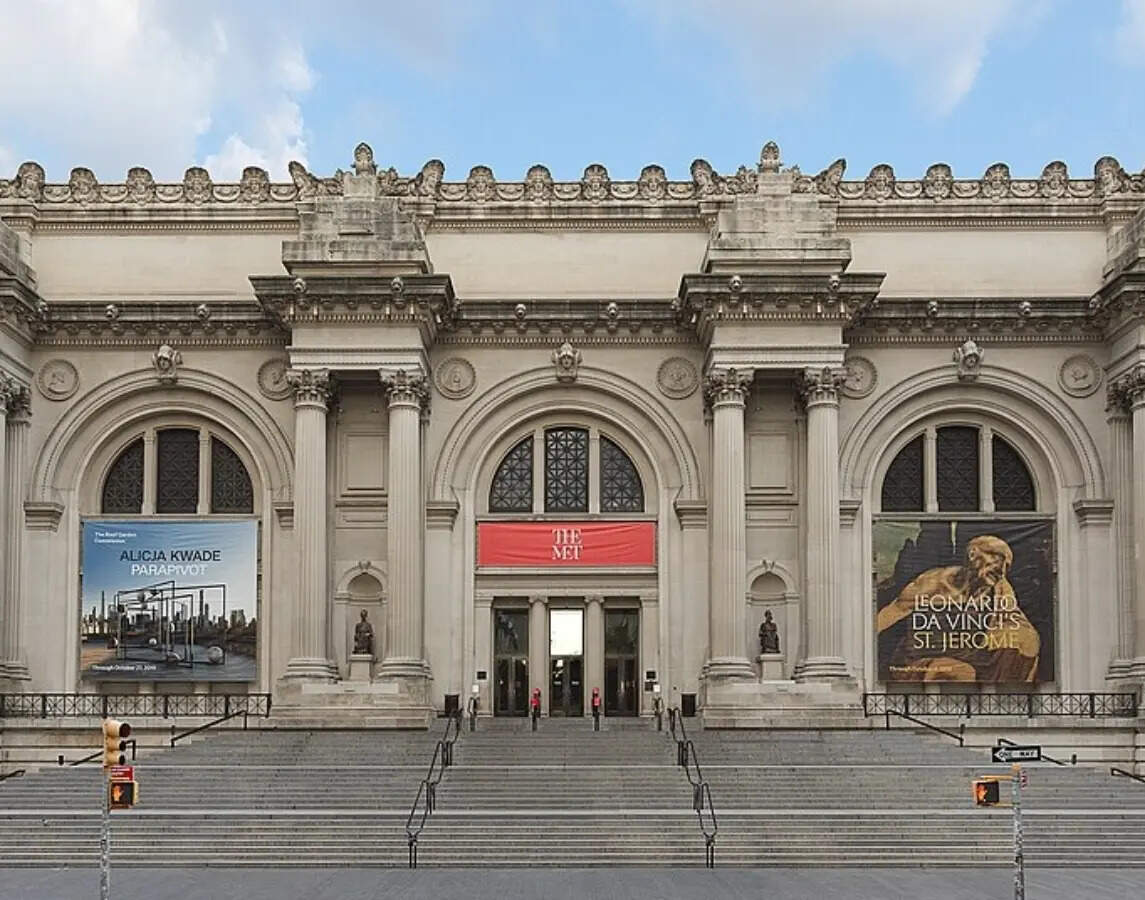
The art gift that changed what millions of museum visitors could see forever. Image credit – Wikimedia
Purpose behind the research centreAlong with the donation itself, there was also provision for funding of the Leonard A. Lauder Research Center for Modern Art at the Metropolitan Museum of Art. It had a role in lending an academic angle to the gift apart from its display worthiness. According to museum authorities, this centre would facilitate research, publications, fellowships, and collaboration for the study of modern art.Experts always point out how the value of a collection increases over time if its study remains continuous and does not get limited to mere display.Its influence was felt even years afterwardsWhile some large donations are talked about for a while and then forgotten, the Lauder collection had quite a different history since it became a huge part of the museum itself. In 2025, the Metropolitan Museum of Art announced that the Leonard A. Lauder Cubist Collection had been completely accessioned into the museum, which allowed for a special display celebrating the contributions of the Lauder family.This signalled the transformation of the collection from something newsworthy to something fundamental to the identity of the institution.Why this philanthropic act is still memorableThis act of giving continues to be remembered since it helps illustrate the bigger picture surrounding cultural philanthropy. While some donations lead to whole new institutions, others help ensure greater accessibility to artefacts that could otherwise only be enjoyed by a few wealthy people.In this instance, the acquisition influenced what a museum seen by millions of people every year could permanently exhibit, educate about, and research. This influence is felt not only by art historians but also by regular patrons visiting the galleries.The significance of this donation was never just its monetary worth. Instead, it lies in converting private works of art into something that can be shared publicly for many years to come.