



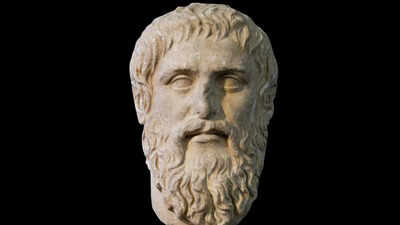
Some quotes survive because they sound wise. Others survive because they create a small moment of discomfort. They stay in people’s minds because they touch something that still feels real long after the world around them changes. This line linked to Plato belongs in that second category. It does not sound gentle or reassuring. It almost feels like a warning spoken centuries ago that somehow managed to remain relevant.People often imagine ancient philosophers speaking only about ideas trapped in another age. They picture old cities, stone buildings and conversations that seem far removed from ordinary life. Yet every now and then an old statement appears and feels unexpectedly modern. That is what makes this quote interesting. Even after thousands of years, it still creates the same question in people’s minds.What happens when decent people simply stop paying attention?That question feels more familiar than many would like to admit.Life today moves quickly. Work fills calendars. Personal responsibilities pile up. News arrives every minute and opinions appear from every direction. After a while many people become exhausted by it all. Some stop following public discussions because everything feels repetitive. Some decide they would rather focus entirely on personal matters. Others quietly tell themselves that larger issues belong to leaders and governments rather than ordinary people.Plato’s quote seems to challenge that thinking.It does not do it loudly. It simply suggests that stepping away completely may create consequences of its own.
Quote of the day by Plato
“The price good men pay for indifference to public affairs is to be ruled by evil men.”
What is the meaning behind the quote by Plato
At first glance, the quote sounds political. Looking closer, it appears to be talking about responsibility in a broader sense.Plato does not seem to suggest that every person should become deeply involved in political debates every day. The message feels more connected to awareness and participation. Communities, societies and institutions function because people remain engaged with what happens around them. They ask questions, make decisions and pay attention to events that shape their lives.The quote becomes interesting because of where Plato places the focus. He begins with “good men” rather than “evil men.” That detail changes the feeling of the entire sentence.The warning is not centred on bad people suddenly appearing out of nowhere. The concern seems to be about decent people becoming detached or indifferent.Many individuals assume avoiding difficult issues creates distance from them. They believe stepping away keeps life simpler and more peaceful. Sometimes that feeling probably makes sense. Public discussions can become frustrating and emotionally tiring.Plato appears to suggest that complete indifference carries a price.Empty spaces rarely stay empty for very long. If thoughtful people decide not to participate, other individuals eventually move into those spaces. The outcome may not always reflect the values of those who stepped away.That idea feels uncomfortable because it shifts attention back toward personal responsibility.
Plato’s own experiences may have shaped these ideas
Plato lived in a period filled with political instability and social change in ancient Greece. His thinking did not emerge from a quiet world untouched by conflict. He witnessed events that reportedly affected him deeply.One of the most important moments involved his teacher, Socrates. Socrates was sentenced to death by Athens after being accused of influencing young people and questioning accepted beliefs.Imagine watching someone you admire stand before a system that suddenly turns against him.Experiences like that rarely disappear from a person’s mind.For Plato, questions surrounding justice, leadership and responsibility became deeply personal. Later, these ideas appeared repeatedly throughout his work. He explored how societies function and what causes them to weaken.He seemed interested in more than political systems alone. Human behaviour itself often became his subject.That probably explains why many of his observations still feel surprisingly current.
There is something strangely ordinary about indifference
Most people do not think of indifference as dangerous.Someone may decide they no longer want to follow certain discussions because they feel tired. Another person may assume their opinion does not really matter. Someone else may believe another individual will eventually deal with the problem.None of these choices sound dramatic.That is exactly what makes them interesting.Indifference usually arrives quietly. It rarely announces itself. People do not suddenly wake up and decide to stop caring about larger issues altogether. It often happens slowly. Attention shifts elsewhere. Daily life becomes busier. Personal concerns take priority.Days pass.Weeks pass.Months pass.Small choices repeated over long periods sometimes create outcomes that nobody originally expected.One person assumes their voice changes nothing.Then many people begin thinking the same way.
Why this old quote still feels close to modern life
There is something slightly strange about reading words written thousands of years ago and recognising modern behaviour inside them.Today’s world provides people with endless information. News updates appear instantly. Opinions travel across social media within seconds. Discussions continue throughout the day without pause.Still, many individuals describe feeling disconnected despite having access to more information than ever before.Some people become overwhelmed by constant headlines. Some feel emotionally exhausted by endless arguments. Others simply stop paying attention because it feels easier.That reaction is understandable.Yet Plato’s quote raises an uncomfortable possibility. Public events continue shaping society whether people pay attention or not. Decisions continue happening. Systems continue changing.Ignoring something does not always prevent its effects from reaching people later.That may be the point sitting underneath the quote.
The message may extend beyond politics
Many people interpret the quote in ways that go beyond governments and public systems.Workplaces sometimes develop unhealthy situations because nobody wants to speak first. Communities occasionally struggle because individuals assume someone else will take responsibility. Families and friendships can experience similar patterns.Someone notices unfair treatment but remains silent because involvement feels uncomfortable.Someone sees a problem and assumes another person will eventually intervene.Someone notices warning signs but decides it is easier not to get involved.Later, people sometimes look back and wonder how situations became so complicated.The answer occasionally feels simple.The issue was not only what happened.The issue was what failed to happen.
Other famous quotes by Plato
- “Wise men speak because they have something to say; fools because they have to say something.”
- “The beginning is the most important part of the work.”
- “Human behaviour flows from three main sources: desire, emotion and knowledge.”
- “Courage is knowing what not to fear.”
- “Necessity is the mother of invention.”
What Plato understood about silence that still matters today
Plato’s quote does not appear to demand endless debate or constant involvement in every issue that exists. The message feels more subtle than that.People often assume avoiding difficult subjects means avoiding their consequences too. Plato challenges that assumption. He suggests that complete indifference can shape outcomes even when individuals believe they are remaining neutral.Perhaps that explains why these words continue resurfacing across generations.The world changes quickly. Technology changes quickly. Human habits, on the other hand, sometimes move much more slowly.And that may be the reason this quote still feels unsettling today. Silence can sometimes shape events just as much as action does.