




Ronda Rousey stepped back into the cage after nearly a decade away and left just as quickly, submitting Gina Carano in 15 seconds before confirming her immediate retirement, a comeback that delivered a staggering payday but also left many fans underwhelmed by how little of a contest they actually saw.The fight headlined Most Valuable Promotions’ first MMA event at the Intuit Dome in Inglewood, California, a card built heavily around nostalgia and star power, yet ultimately defined by how abruptly its main event ended despite years of anticipation surrounding a clash between two pioneers of women’s MMA.
A fight years in the making that ended almost instantly
Expectations had been built over more than a decade, with both fighters long removed from active competition and returning under very different circumstances, creating a sense that the moment itself carried as much weight as the fight.Rousey had not competed since 2016, when back-to-back knockout losses to Holly Holm and Amanda Nunes effectively ended her UFC career, while Carano had been out even longer, having last fought in 2009 before transitioning into acting with roles in major franchises including Deadpool, Fast & Furious and Star Wars.

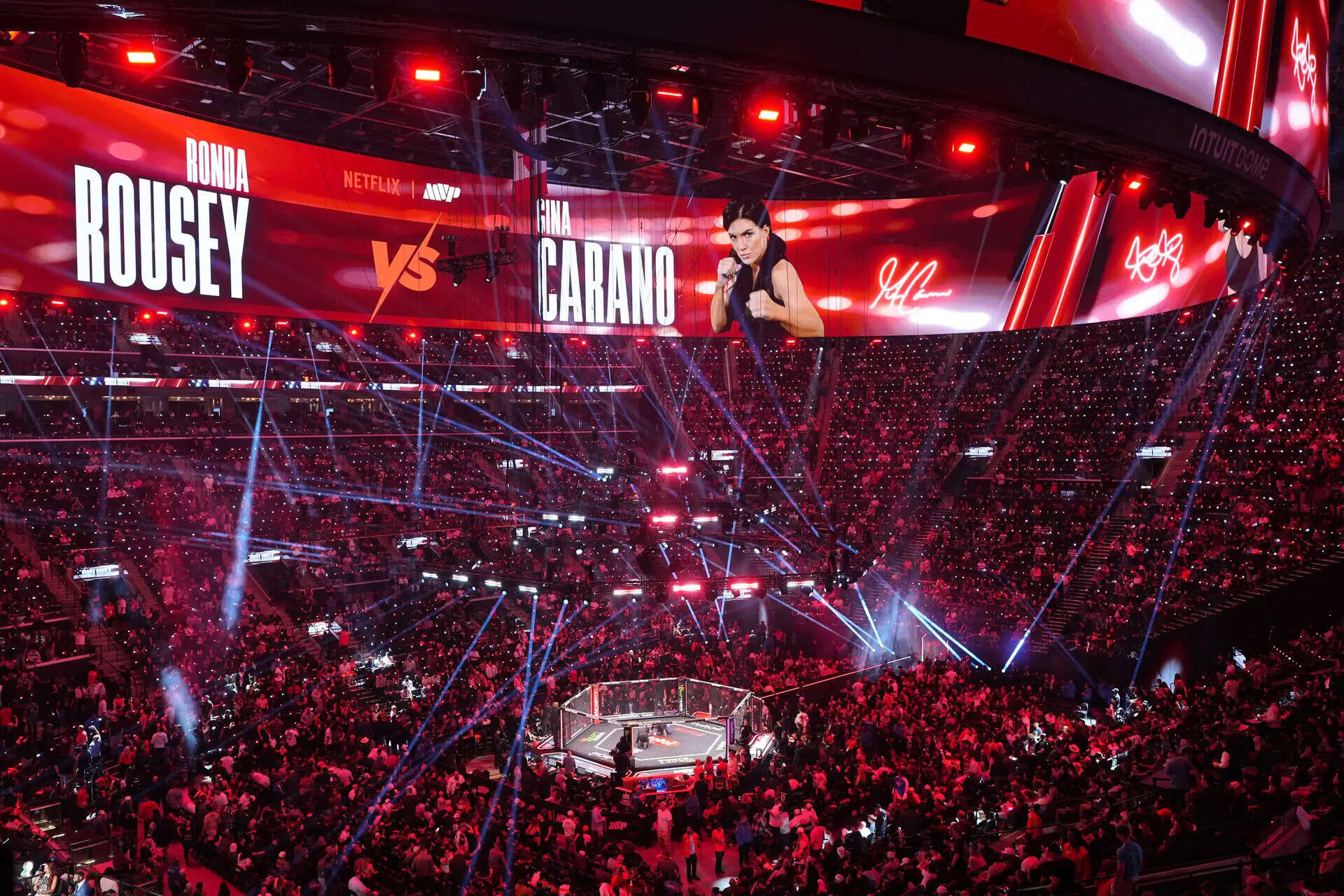
Fans wait for the start of a featherweight mixed martial arts fight between Ronda Rousey, of the United States, and Gina Carano, of the United States, Saturday, May 16, 2026, in Inglewood, Calif. (AP Photo/Jae C. Hong )
When the fight finally happened, it unfolded at a pace that left little room for drama, as Rousey dropped Carano almost immediately before securing an armbar submission inside the opening 15 seconds, bringing a definitive but extremely brief end to a contest many had waited years to see.The speed of the finish became the defining talking point, not just because of how quickly it ended, but because of how sharply it contrasted with the anticipation that had surrounded it.
The numbers behind a 15-second night’s work
Figures released by the California State Athletic Commission and reported by multiple outlets confirmed that Rousey earned $2.2 million for the fight, while Carano received $1.05 million, meaning the winner took home more than double her opponent’s purse despite the minimal time spent in the cage.That payout places Rousey’s earnings at roughly $130,000 per second of fighting, a figure that quickly circulated as a symbol of both the commercial pull she still carries and the unusual nature of the event itself.
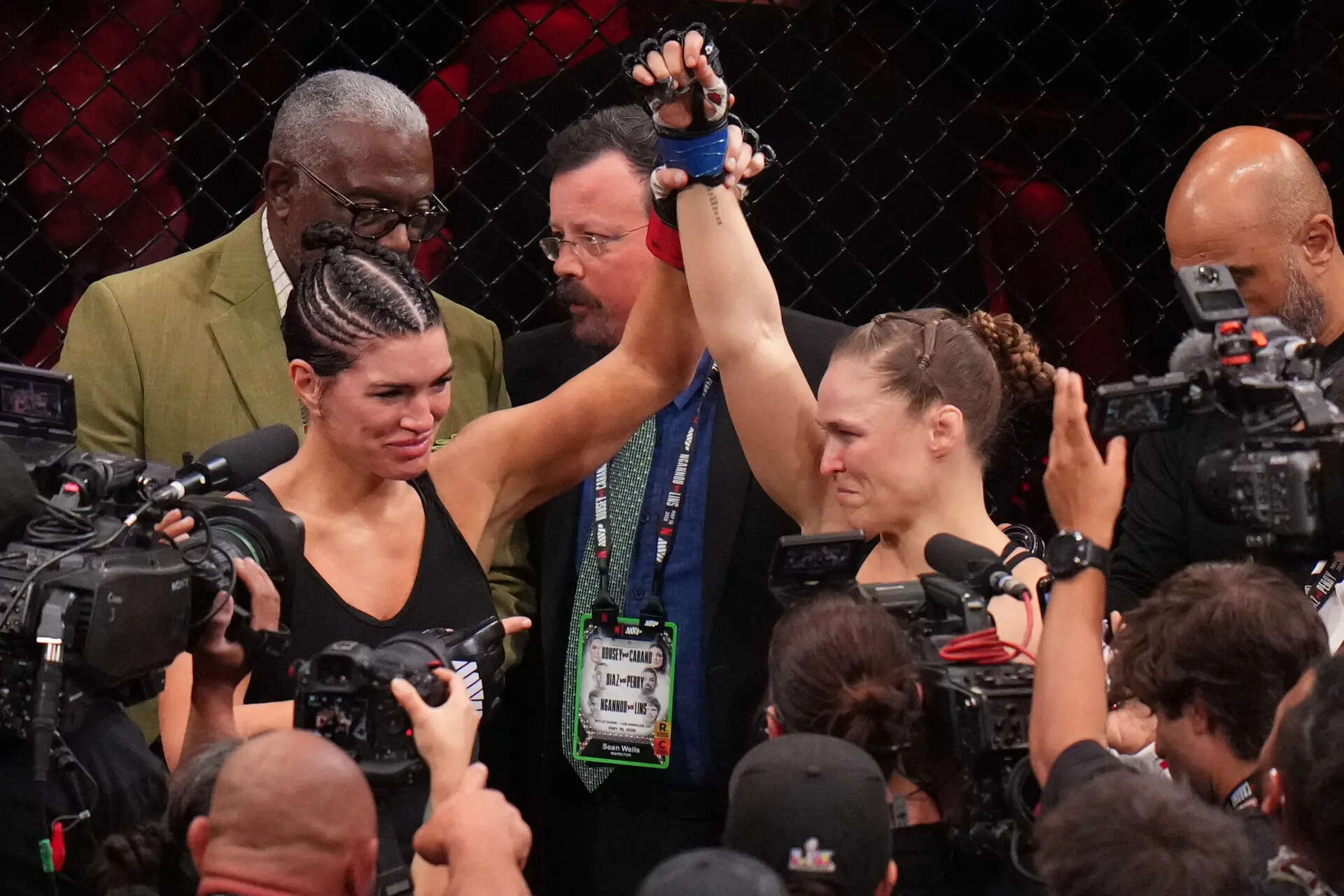
Ronda Rousey and Gina Carano share emotional hug as they fight back tears inside cage
Even those headline numbers, however, only represent disclosed purses, with additional income potentially coming from undisclosed bonuses, sponsorship arrangements, promotional incentives and revenue linked to Netflix viewership and ticket sales, all of which are not included in official commission reports.The scale of the event was reflected across the wider card as well, with every fighter guaranteed at least $40,000, a figure significantly higher than the reported $10,000 minimum seen on some UFC prelim contracts, reinforcing the promotion’s attempt to position itself as a more lucrative alternative.
A card built on big names and big payouts
Rousey and Carano were not the only major earners on the night, with Francis Ngannou securing $1.5 million after knocking out Philipe Lins in the first round, a result that made him the second-highest-paid fighter on the card ahead of Carano despite her headline billing.Ngannou also received a $100,000 Performance of the Night bonus, which he chose to give to Lins, effectively doubling his opponent’s earnings to $200,000 for the event.
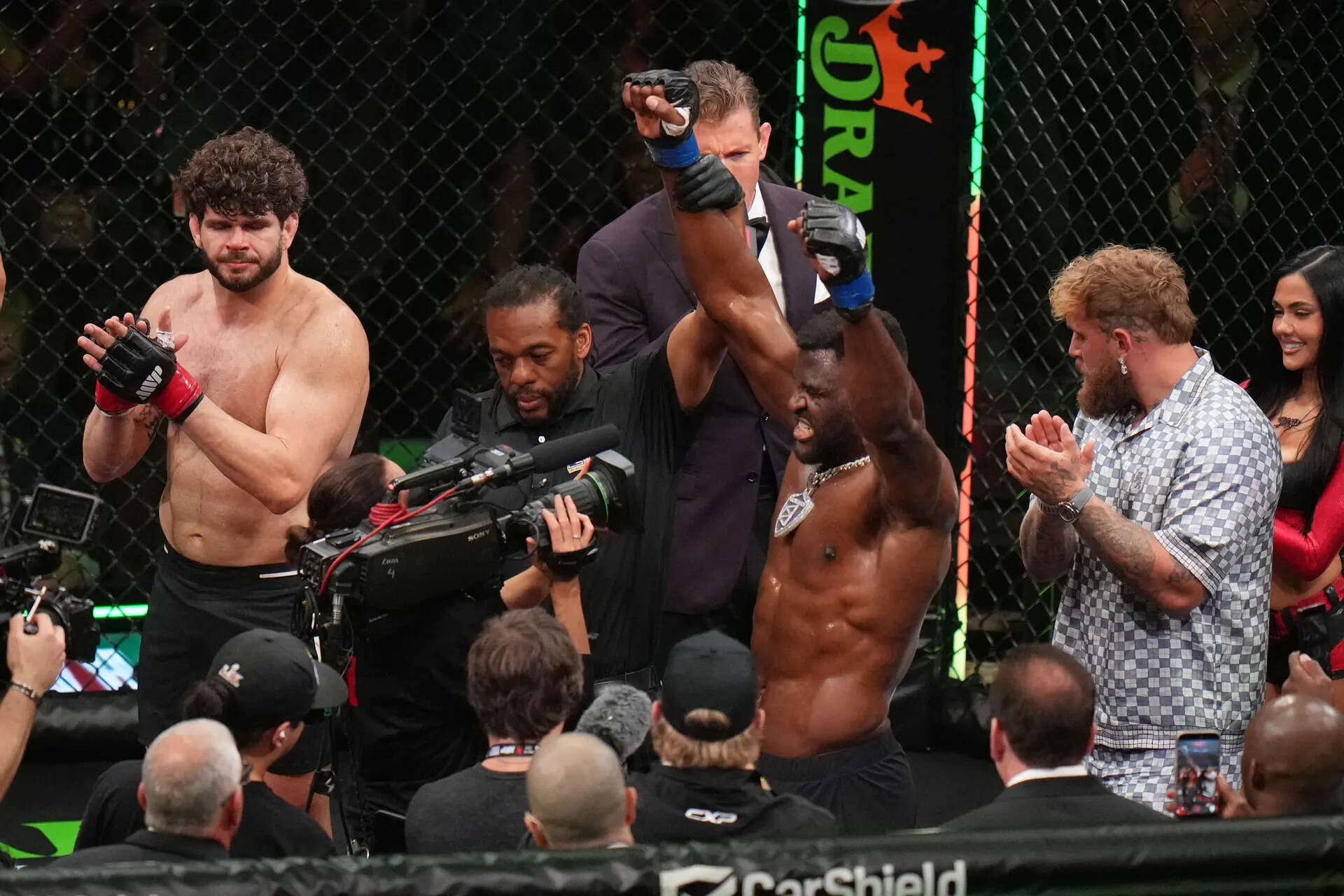
Francis Ngannou, of Cameroon, second from right, celebrates after defeating Philipe Lins, of Brazil, left, in their heavyweight mixed martial arts fight as Jake Paul looks on, right, Saturday, May 16, 2026, in Inglewood, Calif. (AP Photo/Jae C. Hong )
Elsewhere, Nate Diaz earned $500,000 for his return to MMA, while Mike Perry took home $400,000, highlighting the financial scale MVP was willing to commit in order to attract recognisable names from across combat sports.Four of the five fights on the card ended in the first round, reinforcing a pattern where the evening delivered decisive finishes but limited sustained action.
Debate over motive, payoff and entertainment
In the build-up to the fight, Rousey had strongly rejected the idea that her return was driven purely by money, even as speculation around the financial incentives continued to grow.Whether or not that motivation played a role remains open to interpretation, but the outcome left little doubt about the financial reward, particularly given how short the fight itself turned out to be.Speaking before the event, she also used the platform to criticise UFC pay structures, arguing that fighters at the lower end of the scale struggle to earn a sustainable living despite the sport’s commercial success.
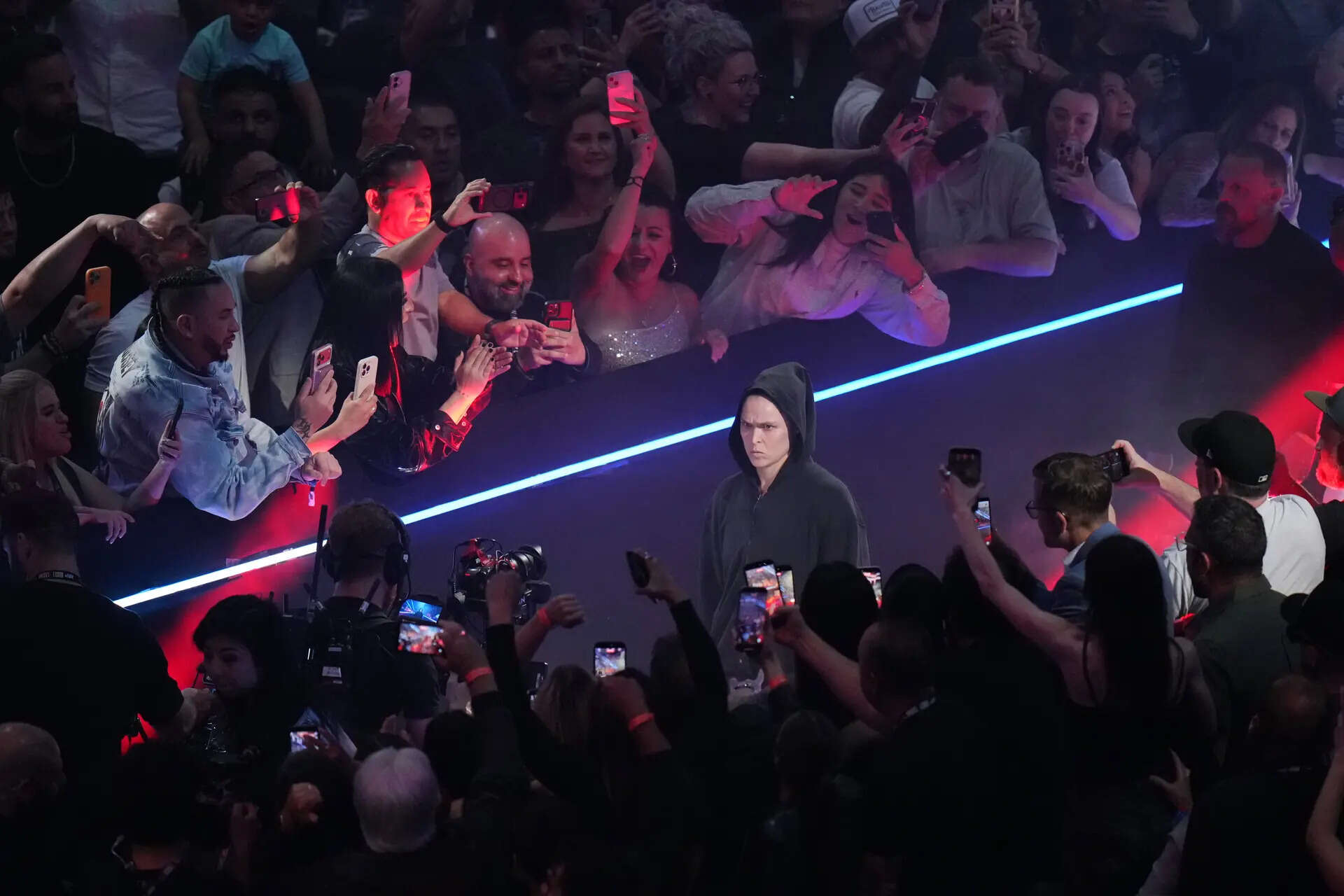
Ronda Rousey, of the United States, is introduced before facing Gina Carano, of the United States, in a featherweight mixed martial arts fight Saturday, May 16, 2026, in Inglewood, Calif. (AP Photo/Jae C. Hong )
“It used to be that UFC was the best place in combat sports to make a living and get paid fairly, and now it’s no longer,” she said, adding that many fighters are “living in poverty level” despite competing full-time, while the organisation continues to generate billions in revenue.She went further, questioning why aspiring athletes would choose MMA over other sports offering greater financial stability, suggesting that the industry risks losing talent because of what she described as short-term thinking focused on shareholders rather than long-term development.
A comeback, a statement and a swift exit
Rousey’s performance itself was efficient and decisive, but the brevity of the fight inevitably shaped how it was received, particularly among fans who had expected a more competitive and extended contest between two of the sport’s most recognisable figures.Financially, the event delivered exactly what it promised, offering purses that outstripped many traditional MMA paydays.
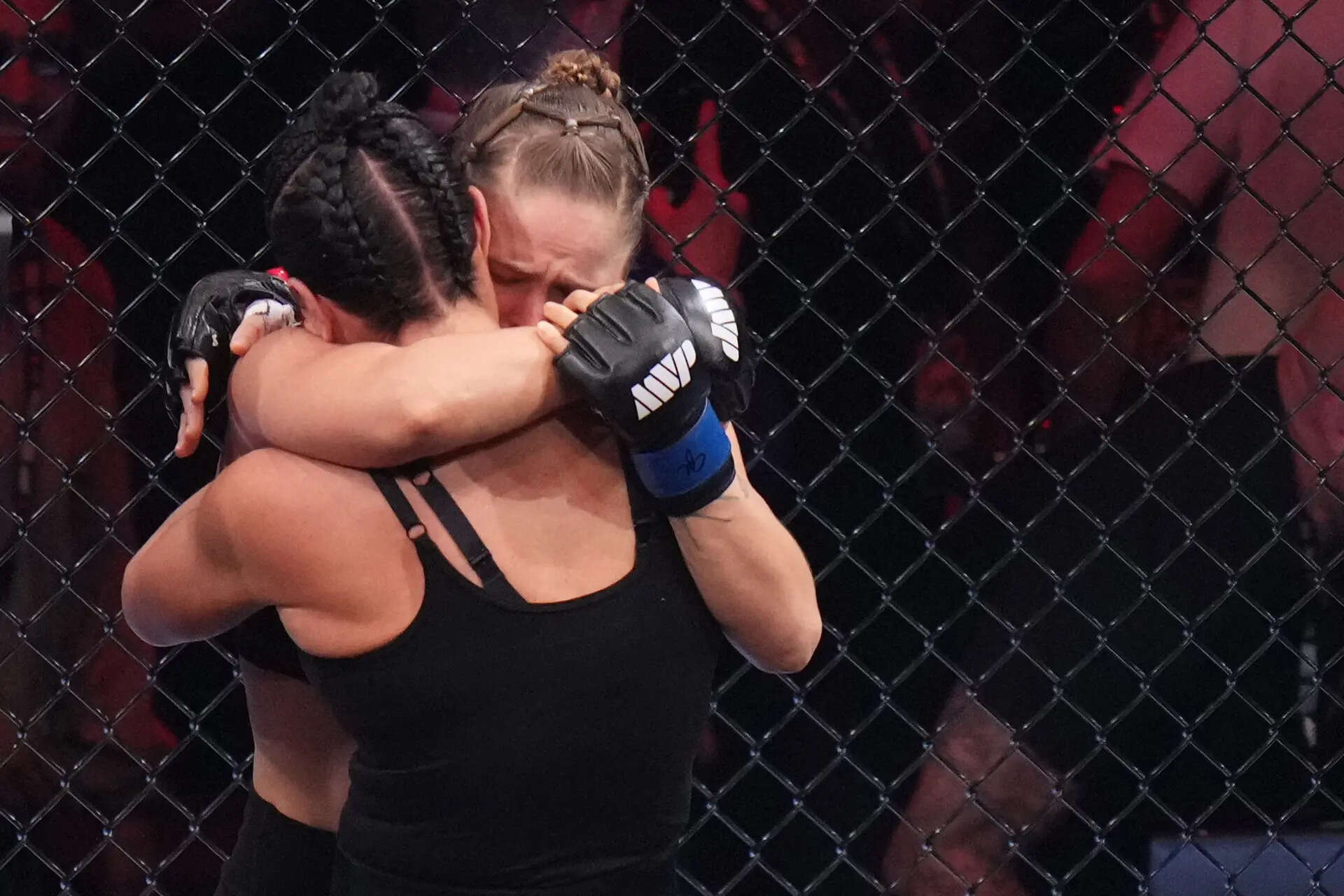
Ronda Rousey, of the United States, behind, hugs Gina Carano, of the United States, after Rousey defeated Carano in their featherweight mixed martial arts fight Saturday, May 16, 2026, in Inglewood, Calif. (AP Photo/Jae C. Hong )
In the days leading up to the fight, Ronda Rousey had already hinted at the scale of what was at stake financially, explaining that while she could not disclose the exact figures in her contract, the deal would earn her “multitudes more” than she ever made during her UFC career.“There’s a multiplication sign involved,” she said, making it clear that the structure of the agreement went well beyond a standard fight purse and included multiple revenue streams tied to the event.After the fight, she expanded on that point, noting that a significant portion of her earnings was linked to promotional work around the event rather than just the bout itself, meaning the $2.2 million disclosed by the California State Athletic Commission likely represents only part of her overall compensation.She also made no attempt to downplay the financial outcome when asked directly, telling reporters: “I’m very happy and very grateful and me and my husband are gonna go house shopping in Hawaii after this,” a remark that showed just how lucrative even a 15-second return had turned out to be.