
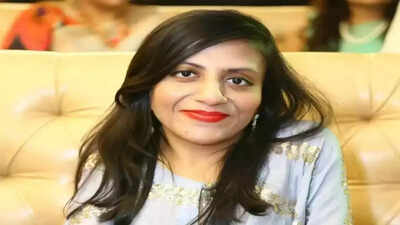
When people talk about India’s toughest exams, the UPSC Civil Services Examination almost always comes up in the same breath as words like “grit”, “competition”, and “dream job”. But every once in a while, a story emerges that doesn’t just talk about clearing this exam—it changes how we think about who gets to dream in the first place.The story of Ira Singhal is one such story.She didn’t just clear the UPSC Civil Services Examination. She topped it. And in doing so, she became the first differently-abled woman in India to secure Rank 1 in the exam’s history.But that headline barely scratches the surface.Early Life: A Childhood That Didn’t Come With “Limits”Born on August 31, 1983, in Meerut, Uttar Pradesh, Ira Singhal grew up in a home where expectations were not defined by physical ability.Her father, Rajendra Singhal, is an engineer, and her mother, Anita Singhal, worked as an insurance advisor. From the beginning, she was raised like any other child—no special treatment, no lowered expectations.She studied at institutions like Sophia Girls School in Meerut, Loreto Convent in Delhi, and Army Public School, Dhaula Kuan. Academically, she was consistently among the toppers.But there was one challenge she carried with her: scoliosis, a spinal condition that affects posture and restricts arm movement. It is a condition that often comes with assumptions—about what one can or cannot do.Ira Singhal simply refused to let those assumptions define her life.Education: Engineering Minds and Business StrategyShe pursued Computer Engineering from Netaji Subhas Institute of Technology, now known as NSUT. A technically strong foundation, but her interests were already broader than code and circuits.She later went on to complete a Dual MBA in Marketing and Finance from the Faculty of Management Studies, University of Delhi.This combination—engineering precision and business strategy—would later shape her analytical approach to governance and policy.Corporate Chapter: Before the Civil Services CallingLike many ambitious graduates, Ira first stepped into the corporate world. She worked as a Strategy Manager at Cadbury India and also interned with the Coca-Cola Company. She even taught Spanish for a year.On paper, it looked like a conventional success story in the making. But Ira had a different exam in mind.The UPSC Dream: Four Attempts, One Unshakable GoalIn 2010, she took her first attempt at the UPSC Civil Services Examination. She cleared it. She was allocated the Indian Revenue Service. But what followed wasn’t celebration—it was rejection.She was told she could not be posted because her disability made her “unfit” for roles requiring physical tasks like pushing, pulling, or lifting. For many, that would have been the end of the story.For Ira, it became the beginning of a legal and personal battle. When the System Said “No”She approached the Central Administrative Tribunal (CAT), challenging the decision. The argument was simple yet powerful: disability should not be equated with inability. While the case was still pending, she didn’t stop.She appeared for UPSC again in 2011 and cleared it—again getting into the Indian Revenue Service. Still, no posting followed. She tried again in 2013. Cleared it again. The uncertainty continued.Three attempts. Three successes. Yet no real entry into service. And still, she didn’t step back.2014: The Year Everything ChangedIn her fourth attempt, in 2014, something extraordinary happened. While her case was still under judicial consideration, Ira Singhal appeared once again for the UPSC Civil Services Examination.In May 2015, results were declared. She had secured All India Rank 1. A score of 1082 out of 2025 made her the topper of one of the toughest competitive exams in the world. It was more than a personal victory. It was a systemic moment of reckoning. She became the first differently-abled woman in India to top the exam.Beyond the Rank: Service in ActionHer first major posting as Sub-Divisional Magistrate in Alipur, North Delhi, showed that her journey was never just about clearing an exam.In one year, she played a role in rescuing around 340 child and bonded labourers, helping restore them to their families.She also made history again by facilitating full-time government employment for a transgender person—one of the earliest such instances in Delhi’s administrative framework.Later, she went on to serve in multiple capacities and is currently posted as Special Secretary, Education, in Arunachal Pradesh.Recognition, Responsibility, and RepresentationOver the years, Ira Singhal has been associated with several national initiatives. She has served as:• Brand Ambassador for disability inclusion initiatives under the Ministry of Social Justice and Empowerment• Advocate for gender and child welfare initiatives under the Ministry of Women and Child Development• Member of national accessibility and election inclusion panelsHer contributions extend beyond administration into policy design and inclusion frameworks, including inputs on examination policies for students with disabilities under CBSE.She has also received several honours, including national-level awards recognizing her contribution to public service and inclusion.The Line That Stays With Many AspirantsAmong the many things Ira Singhal has said over the years, one quote often circulates among UPSC aspirants: “Make your plans. No one knows you like you do. Do not wait for someone else to validate your dreams.”It is not motivational fluff. It comes from lived experience—of being told “no” even after proving “yes” repeatedly.Why Her Story Still Matters in Education TodayIn an exam-driven culture like India’s, success is often measured narrowly—rank, marks, and selection lists. But Ira Singhal’s journey forces a broader conversation.It asks uncomfortable but necessary questions:• What does “eligibility” really mean?• Who gets to define capability?• And how many potential stories are lost before they even begin?Her journey is not just about cracking UPSC. It is about persistence in a system that initially refused to see her as fit to serve—even after she had already proven otherwise.The Larger LessonIra Singhal’s story doesn’t offer an easy formula. There is no shortcut in it, no “hack”, no predictable path.What it offers instead is something far more demanding: A reminder that systems can be slow to change—but individuals don’t have to wait for them to catch up before they move forward.And sometimes, change begins when someone clears an exam the system once said they shouldn’t even be allowed to attempt.
