
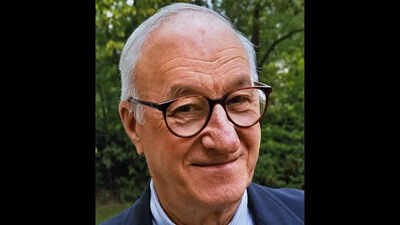
Some quotes remain relevant because human nature rarely changes as much as people think it does. Societies evolve. Technology changes rapidly. Entire industries disappear and new ones emerge. Yet human behaviour often repeats the same patterns generation after generation, especially when responsibility becomes shared among large groups of people. That is probably why this quote by Canadian-American psychologist Albert Bandura still feels strikingly modern even today.“Where everyone is responsible, no one is really responsible.”The sentence sounds simple at first glance. Almost too simple. Yet the more somebody thinks about it, the more uncomfortable it becomes because most people have seen this exact situation happen many times in ordinary life.A problem appears.Everybody notices it.Everybody assumes somebody else will handle it.Nothing happens.That pattern exists almost everywhere. Offices. Schools. Governments. Friend groups. Online communities. Even families sometimes. People tend to believe shared responsibility automatically creates cooperation, though Bandura’s quote seems to suggest the opposite can happen. When accountability becomes vague or spread too widely, action often disappears because individuals stop feeling personally responsible.The result can be frustrating. Sometimes even dangerous.
Quote of the day by Albert Bandura
“Where everyone is responsible, no one is really responsible”
Know the meaning behind the quote by Albert Bandura
At its core, the quote appears to describe how responsibility weakens when too many people assume somebody else will step forward first. Human beings often behave differently in groups than they do individually. A person who would normally act quickly alone may hesitate completely when surrounded by others.Psychologists sometimes refer to this as “diffusion of responsibility.” The larger the group becomes, the easier it feels for individuals to mentally distance themselves from action. People unconsciously assume somebody more qualified, more confident or more authoritative will eventually intervene instead.That assumption creates paralysis surprisingly often.Imagine a workplace where a serious mistake becomes visible to everybody. Each employee notices it, though nobody addresses it directly because everyone assumes another colleague has already reported the issue. Eventually, the problem grows larger precisely because responsibility became shared rather than clearly defined.Bandura’s quote seems to warn against this kind of collective passivity.The line may sound cynical initially, though it reflects a very real pattern in human behaviour.
Albert Bandura spent years studying human behaviour
Albert Bandura became one of the most influential psychologists of the twentieth century because his work focused heavily on how people learn behaviours socially. He is especially known for developing social learning theory, which explored how observation, imitation and environment shape human actions.Bandura believed people are deeply influenced by what they see around them. Human beings do not simply learn through direct experience. They also learn by watching how others behave and observing which behaviours get rewarded or ignored.That idea connects strongly to this quote.When individuals repeatedly observe situations where nobody accepts responsibility, that behaviour itself becomes normalised. Over time, people become increasingly passive because they unconsciously expect inaction from the group around them.Bandura seemed deeply interested in these subtle social dynamics because they influence almost every part of life, from education and workplaces to politics and relationships.
Modern workplaces often struggle with this problem
One reason this quote feels especially relevant now is that modern workplaces frequently operate through large teams, complex structures and endless collaboration systems. In theory, teamwork sounds ideal. In reality, unclear accountability sometimes creates confusion rather than efficiency.Employees attend meetings where everybody discusses problems enthusiastically, though nobody leaves with direct ownership over solving them. Emails get copied to dozens of people simultaneously until responsibility becomes diluted completely. Deadlines pass because every individual quietly assumes somebody else is handling the situation already.Many workers probably recognise this immediately.The problem becomes even worse inside massive organisations where communication already feels impersonal. When people feel emotionally disconnected from outcomes, accountability weakens naturally.Bandura’s quote captures that dynamic with uncomfortable accuracy.Sometimes, responsibility needs clarity more than quantity.
Social media created new versions of the same behaviour
Interestingly, the quote also feels highly relevant in the age of social media. Millions of people now witness tragedies, controversies or crises online simultaneously. Information spreads instantly. Emotional reactions spread too. Yet genuine action often remains surprisingly limited.Part of the reason may involve exactly what Bandura described.When huge numbers of people become aware of the same issue, individuals sometimes assume collective awareness itself equals meaningful action. Sharing outrage publicly can create the feeling that responsibility has already been fulfilled.In reality, nothing substantial may actually change.That disconnect appears often online. A topic trends for several days. Everybody discusses it intensely. Then attention shifts elsewhere before meaningful solutions appear. Collective visibility sometimes creates the illusion of responsibility while weakening individual action underneath.Bandura’s observation feels remarkably ahead of its time in that sense.
The quote also says something uncomfortable about human nature
Another reason this quote stays memorable is that it forces people to confront an uncomfortable truth about themselves. Most individuals like believing they would act responsibly in difficult situations. Reality can become more complicated once group psychology enters the picture.People often wait for permission from others without consciously realising it.Someone hesitates speaking first during conflict because silence has already become the group norm. Another person notices unfair behaviour, though avoids intervening because nobody else seems concerned enough to react publicly. Over time, passivity spreads socially.That process can happen quietly.Almost invisibly.Bandura seems interested in exactly those moments where responsibility disappears, not because people are cruel, but because human beings are strongly influenced by surrounding behaviour.The quote feels powerful because many readers recognise themselves inside it somewhere.
Why accountability matters more than ever now
Modern life has become increasingly interconnected, though personal accountability still matters enormously. Organisations, governments and communities function properly only when individuals feel genuine ownership over actions and decisions.Without that sense of ownership, problems drift endlessly.Everybody discusses them.Nobody solves them.That is why strong leaders often define responsibility very clearly. Effective teams usually work best when people understand exactly what belongs to them personally instead of assuming collective awareness alone will produce action automatically.Bandura’s quote quietly reminds readers that responsibility must feel personal before it becomes meaningful.Otherwise, it dissolves.
Life lessons hidden inside Albert Bandura’s quote
The quote teaches that accountability becomes weaker when roles remain unclear. People are far more likely to act when responsibility feels personal and direct rather than vague or collective. Another important lesson involves self-awareness. Human beings naturally look toward groups for behavioural cues, often without noticing it consciously.The saying also highlights the danger of passive observation. Problems rarely disappear simply because many people notice them simultaneously. Awareness matters, though action matters far more.Perhaps the biggest lesson hidden inside the quote is that responsibility requires courage. Stepping forward first can feel uncomfortable because it breaks social hesitation. Yet many important actions throughout history happened because one individual refused to assume somebody else would deal with the problem eventually.
Other famous quotes by Albert Bandura
- “People not only gain understanding through reflection, they evaluate and alter their own thinking.”
- “In order to succeed, people need a sense of self-efficacy.”
- “Learning would be exceedingly laborious if people had to rely solely on the effects of their own actions.”
- “Moral justification is a powerful disengagement mechanism.”
- “People’s beliefs about their abilities have a profound effect on those abilities.”
Final takeaway from the quote
Albert Bandura’s quote continues resonating because it captures a frustrating reality people encounter constantly in ordinary life. Shared responsibility sounds positive in theory, though in practice, it sometimes weakens accountability instead of strengthening it.People assume somebody else will speak first.Somebody else will intervene.Somebody else will solve the problem eventually.Bandura seems to challenge that instinct directly. His quote reminds readers that responsibility only becomes meaningful when individuals personally accept it instead of quietly handing it to the group around them.Perhaps that is why the line still feels so relevant now. Modern life became increasingly collective and interconnected, though meaningful change still usually begins with one person deciding not to wait for everybody else first.
