
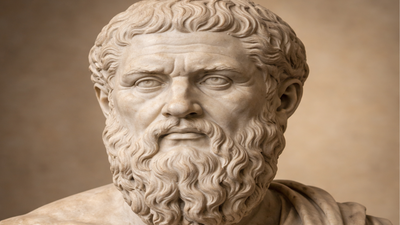
Some quotations survive centuries because they still describe human behaviour with surprising accuracy. Even in a world of smartphones, artificial intelligence and social media, the ideas written by ancient Greek philosopher Plato still feel relevant. One of his most famous quotes is, “We can easily forgive a child who is afraid of the dark; the real tragedy of life is when men are afraid of the light.”At first, the quote may seem simple but it has a deep meaning about fear, truth, knowledge and human nature. Almost all understand why a child fears the dark. Darkness is about uncertainty, about the unknown. But Plato thought that there was a very different kind of fear that comes with adulthood. He says the real problem begins when people become afraid of “the light” – truth, wisdom, understanding, self-awareness.That idea still has a close association with modern life. People today have more information than ever before, yet many still turn away from uncomfortable truths about society, relationships, health, money, or even themselves. Plato’s words still ring true, because they speak to an age-old human tendency: to avoid reality when it is hard or inconvenient.The quote has been widely shared across classrooms, books, leadership talks and online discussions because it speaks to something deeply emotional and universal. It’s a reminder that growing older doesn’t necessarily mean growing wiser. And sometimes it takes courage to be wise. The courage to face truths that threaten our comfort and our familiarity.
Quote of the day by Plato
“We can easily forgive a child who is afraid of the dark; the real tragedy of life is when men are afraid of the light.”
The deeper meaning behind Plato’s “fear of the light”
In Plato’s philosophy, light was often a symbol for knowledge and truth. Darkness meant ignorance and delusion. One of the most striking examples of this idea is found in his famous philosophical work, The Allegory of the Cave.In the story, prisoners are chained their whole lives in a cave. These men see shadows only that pass over the wall. As they know no more, they think them to be real. One prisoner gets away and sees the sun for the first time. The brightness hurts his eyes at first. The outside world is confusing and uncomfortable. But little by little, he comes to see that the world outside the cave is the real reality.He returns to tell the others, who reject him. They like the shadows; they know better than the painful adjustment truth requires.This philosophical story is very much related to the quote of fearing the light. Plato thought that people often resist truth because truth demands change. It can make someone doubt their long-held beliefs, confess to mistakes, or rethink their understanding of the world.The quote then really isn’t about physical darkness or light. It is human behaviour. Ignorance is understandable to Plato, but to reject truth after encountering it is far more tragic.
Why the quote still feels relevant in modern times
Plato lived more than 2,000 years ago, but the emotional truth behind his words still holds true today. So often today we find ourselves in situations where we have a hard time accepting uncomfortable truths.Some people do not go for medical checkups for fear of bad results. Some people ignore financial problems until they are too big to solve. Many people resist criticism because it can be emotionally painful to admit you were wrong. In work life, too, people sometimes turn down new ideas because change can feel threatening.This behaviour is now happening on social media. Online platforms tend to create digital environments where people generally meet opinions that are similar to their own. This can make it harder for people to engage openly with views that challenge them. The quote from Plato seems especially relevant in such an environment, a warning against the fear of truth or intellectual growth.The quote also speaks of personal development. Growth often begins when people face realities they have avoided. Someone may come to see that a relationship is unhealthy, identify emotional struggles, or recognise behaviours that need to change. These are uncomfortable times, but they can be times of change, too.Plato’s observation still resonates with us because it speaks to the emotional challenge of facing the truth head-on.
The philosopher whose ideas shaped centuries
Plato has been one of the most influential thinkers in history. He was born at Athens about 428 B.C., and was a pupil of Socrates and a teacher of Aristotle. These philosophers, collectively, formed a large part of Western thinking.Plato founded the Academy in Athens, which was likely one of the first higher education institutions in the Western world. He wrote on politics, ethics, education, justice, knowledge, and the nature of reality.What made Plato’s work so remarkable was that he could explore difficult ideas through stories and conversations that people could relate to. Instead of dry theories, he explored human emotions, fears, ambition, morality and behaviour in ways that still feel surprisingly modern.Plato’s work has laid the foundations for many ideas in modern philosophy, education and political theory. Even today, students around the world continue to read his dialogues, for they deal with questions with which humanity still grapples.
Why truth often feels uncomfortable
Modern psychology offers some interesting reasons why Plato’s quote still seems to ring true. Humans are naturally drawn to emotional security and familiarity. Trouble often arises when information conflicts with personal beliefs or identity.Psychologists sometimes refer to this reaction as “cognitive dissonance.” This happens when a person is faced with facts that contradict their existing beliefs. But people might be emotionally unwilling to accept the information and so might ignore or dismiss it rather than update their beliefs.This is a common behaviour in daily life. Someone might not want to talk about relationship issues because they may be afraid of confrontation. Another might continue unhealthy habits even knowing the consequences. Many people push back against criticism because it’s threatening to their self-image to admit error.This quote from Plato captures this emotional reality with extraordinary simplicity. The fear of the dark is instinctive and makes sense. Fear of truth is more complicated because it’s about self-awareness and vulnerability.
Education, knowledge, and intellectual courage
Plato did not think that education was merely a matter of remembering information. Real learning was about questioning assumptions and digging for a deeper understanding. His quote requires intellectual courage in many ways.Learning can be a bit uncomfortable because it changes the way people see themselves and the world around them. Students quickly find that the world isn’t as simple as they first thought. New knowledge can contest traditions, assumptions, and received beliefs.Plato held that an open mind is necessary to wisdom. Those who fear knowledge are like prisoners in a cave, believing shadows to be reality, trapped in a limited understanding.And this is one reason why Plato’s work is still cited in discussions of education and personal development. His ideas arouse curiosity, not fear.
How the quote connects with society today
The idea of “fearing the light” extends to larger social situations as well. People who questioned accepted ideas have often been met with resistance throughout history.Scientists’ revolutionary discoveries came in for criticism. Reformers demanding equality faced opposition. Journalists who uncovered corruption came under attack. Mental health used to be heavily stigmatised because discussing it made people uncomfortable.Over the years, many of those truths were finally accepted. But Plato’s quote reminds readers that societies, like individuals, often resist difficult realities in the first instance.The quote also resonates in contemporary debates about misinformation and public discourse. In an era where information travels at the speed of light, the ability to separate fact from fiction has never been more important. Plato’s words prompt thoughtful consideration rather than unquestioning acceptance or emotional response.
Why people still connect emotionally with the quote
This quote continues to circulate widely online, in part because of its emotional simplicity. Who isn’t familiar with childhood fear of darkness? That familiar image is used by Plato to reveal a deeper truth about adulthood.The quote does not abuse or insult people. But it does obliquely refer to a human foible that most of us suffer from at one time or another. Most people have avoided uncomfortable truths at some point in their lives.Some readers take the quote spiritually. Some see it as psychological or philosophical. Most people think of it as personal development or social awareness. It’s that flexibility that makes the quote relevant across cultures and generations.Its message seems timeless because human beings still grapple with fear, truth, and uncertainty, as they did thousands of years ago.
Other famous quotes by Plato
- “Wise men speak because they have something to say; fools because they have to say something.”
- “The beginning is the most important part of the work.”
- “Human behaviour flows from three main sources: desire, emotion, and knowledge.”
- “Opinion is the medium between knowledge and ignorance.”
- “Knowledge which is acquired under compulsion obtains no hold on the mind.”
- “Necessity is the mother of invention.”
Why ancient philosophy continues attracting modern audiences
Even in a fast-moving technological world, many people are still looking for ancient philosophy to help them see clearly and gain perspective. Plato and other philosophers talked about feelings and dilemmas that still exist in human life.Questions about truth, morality, fear, justice, and identity have been asked throughout history. Technology can change daily life, but human feelings and struggles are often surprisingly similar.This is one of the reasons why quotes from the ancient philosophers are still going around on the internet. Readers recognise themselves in these observations, even when the words were penned thousands of years ago.Plato’s writings still draw an audience because they make you think, not give you easy answers. His ideas make you think about what you believe and why you believe it.
The lasting relevance of Plato’s words
Plato’s quote about fear of the light is powerful because it speaks to a universal human challenge. Darkness is natural fear and uncertainty. Light stands for wisdom, awareness and truth. Plato says that the greater tragedy is not ignorance itself, but the refusal to face truth when it becomes visible.The quote encourages honesty, curiosity and courage. It reminds readers that growth often starts with uncomfortable discoveries. Truth can be hard at first, like going from dark to bright sunlight. But if you avoid truth you will never see the full picture and never grow.More than 2,000 years after Plato first put these ideas into words, his words continue to shape conversations about knowledge, self-awareness and human behaviour. That enduring relevance is precisely why his philosophy is still alive today.
