
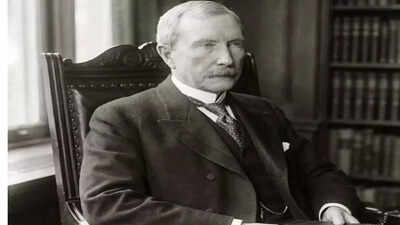
The history of modern education in terms of architecture tends to portray the establishment of a research centre for the elites as an automatic consequence of unbridled greed. It is easy to assume that when an industrial tycoon builds a university, all he needs to do is write large checks in order to build himself an institution solely for his ego.But this romanticised view overlooks the highly disciplined strategy required to turn a young institution into a self-sustaining powerhouse. Long before an academic centre can attract elite thinkers or secure global recognition, its founders must establish a rigid system of financial accountability and community buy-in.When a prominent leader treats a multi-million dollar donation as conditional seed capital rather than a permanent handout, they create an operational culture designed to thrive independently.In an incredible demonstration of institutional design that shattered traditional nineteenth-century philanthropy, industrialist John D. Rockefeller applied this exact corporate logic to the creation of the University of Chicago. Instead of acting as an open-ended patron who completely handled all structural expenses, the billionaire deliberately structured his early financial support to force community participation.His commitment of $600,000 in 1889 was tied to a clear deadline where he expected the locals from Chicago to contribute an additional $400,000 in one year’s time before he could release any amount of his funds.Whereas popular lore often reduces the nature of this partnership to mere stories of casual benevolence, the true success was in this structural advantage. By not allowing the school to be simply a static reminder of his personal fortune, the founder transformed what would have been merely a windfall donation into a financial powerhouse that ultimately grew to $35 million in total capital.Accountability through re-engineering capital loopsTo appreciate why a well-structured and conditional endowment provides more lasting worth than conventional unrestricted gifts, one must consider the distinctive organisational behaviour that it creates. Unlike traditional donations that permit the institution’s administration to be complacent or overly reliant on a sole contributor, conditional capital requires that the university continue to cultivate trust within its immediate community.The management will be compelled to present their vision to the local community to raise matching funds, thus refining their academic mission and functioning process in the process. The discipline of doing this becomes a safeguard against organisational decline and ensures that any expansion initiative has the genuine needs of the locals behind it.It is precisely this kind of philosophy that has enabled the actual meaning of Rockefeller’s famous remark about the school being his best investment to remain intact. According to historical records published in the University of Chicago Alumni Magazine Special Exhibit, the renowned industrialist actually used these words at the Quinquennial Celebration of 1896 to remind everyone of their responsibilities.
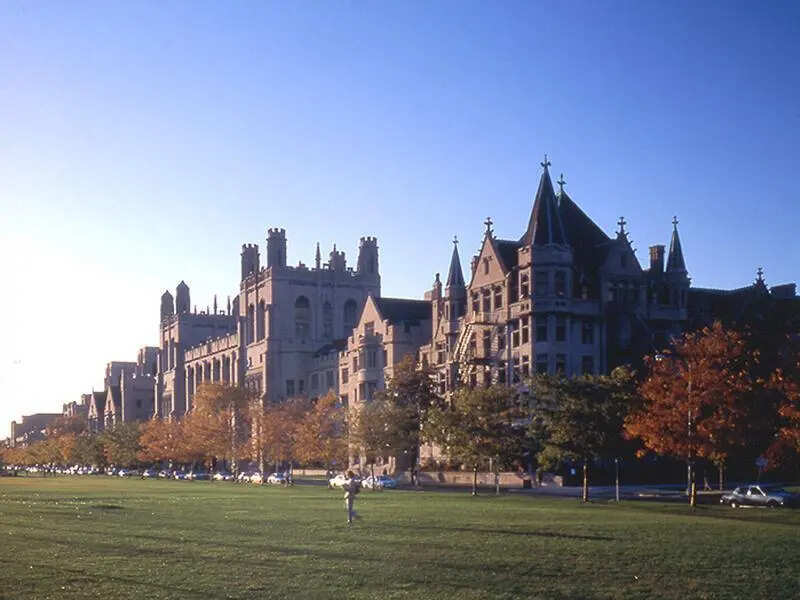
Industrialist John D. Rockefeller built the University of Chicago using a smart financial strategy. He made his donations conditional, requiring local contributions. Image Credits: Wikipedia
From the main documents, it becomes evident that his statement did not imply any claim to ownership. It was rather a statement concerning the excellent results of a very successful system of mutual risk-sharing. By setting up an endowment that would prevent him from controlling everything that happened at the university, the founder made sure that the administration would be left to the local trustees, turning a small Midwest college into a research institution in just a matter of months.The long-term payoff of independent governanceThere is another important point that can be learned from all this. To have a positive impact on society and gain prestige, one needs to build upon more than just a quick influx of money. One needs to create a certain governance system that will exist independently of the original creator for centuries to come.When a private resource is assimilated into a very accountable public service, it creates an immense reservoir of institutional credibility, which continuously attracts top-quality staff, large research funding, and future generations of brilliant academics.The permanent utility of this hands-off governance model is explicitly detailed in the historical documentation compiled for the University of Chicago Library Building a Long Future Exhibition. The archived data outlines how the foundational framework allowed the institution to rapidly transform into a world-renowned research centre in less than two decades.Since the initial investments were specifically linked to structural independence rather than individual branding, the new generations of funding institutions, such as the Rockefeller Foundation, could easily overlay multidecadal investments to construct the medical school and further develop the training of advanced social services.By focusing on building institutional strength over creating their own legacies, such leaders construct buildings that are wonderfully suited to meet the new challenges presented by the world at large. By viewing philanthropy as a risky investment in human potential, rather than as a straightforward donation, this time-tested formula proves that the greatest achievement for any innovator is to create an institution larger than himself.
