

In a bid to keep foreign exchange reserves buffer intact, the government has raised the import duty on gold and silver to 15% from 6%. India is the world’s second-largest consumer of gold and the latest move is part of efforts to reduce inbound shipments and relieve pressure on foreign exchange reserves amid the economic strain caused by the US-Iran conflict.India relies heavily on overseas purchases to meet domestic gold demand and has periodically taken steps to discourage excessive consumption. In India, gold remains closely linked to weddings, festivals and long-standing cultural practices, which makes buying the precious metal more of a necessity for many households rather than a discretionary expense.The move to up the gold import duty comes days after PM Narendra Modi appeals to citizens to avoid unnecessary gold purchases for a year. But is a hike in duties an effective way to curb consumption? We take a look:
Why are gold and silver imports in focus?
The government considers precious metal imports as a major contributor to pressure on the current account deficit, especially because such imports are viewed as non-essential compared to critical commodities.Although import volumes of gold and silver have remained relatively stable, the sharp rise in global prices has significantly inflated the import bill, increased outflows of foreign exchange and added pressure on the rupee. India’s expenditure on gold and silver imports climbed to a record $84 billion in the fiscal year ended March, compared with $35.5 billion a decade ago.India is also the world’s largest consumer of silver, which is widely used not only in jewellery, bars and coins but also across industries such as solar power and electronics.Over the past year, demand for silver has increasingly been driven by investment interest rather than traditional consumption of jewellery and silverware, with inflows into silver exchange-traded funds reaching an all-time high.
But, does a higher duty curb demand?
The numbers reveal a telling picture: even though domestic gold prices have surged by 443% over the past decade, the annual consumption has largely remained stable in the range of 666 to 803 metric tonnes.Gold demand had also stayed resilient during the 2012-2013 period when India increased import duties from 2% to 10%. After already absorbing a 76.5% jump in gold prices in 2025, consumers are not expected to significantly cut purchases solely because of an additional 9% rise in tariffs, according to a Reuters analysis.The fundamental point to understand is that for many Indian households, gold is viewed as a long-term store of value and protection against inflation and currency depreciation. In rural regions, farmers often depend on gold as a financial safety net during emergencies.Loans backed by gold are also among the fastest ways for millions of Indians to obtain funds, with banks and finance companies frequently disbursing credit within minutes.
Which section will take a hit?
Traditionally, jewellery accounts for nearly three-fourths of India’s total gold consumption, while the remaining demand comes from investments such as coins, bars and gold exchange-traded funds (ETFs).Jewellery purchases had already begun slowing because of elevated prices, and any further increase is likely to weaken short-term buying while encouraging consumers to shift toward lower-carat products.Investment-driven demand behaves differently. Investors generally purchase gold expecting prices to rise further, while Indian buyers have historically treated the metal as a safe-haven asset and a shield against inflation.Higher import duties increase domestic prices, which may further strengthen gold’s image as an appreciating asset. Rising prices can also attract additional investors who fear missing out on future gains, says the Reuters report.In the March quarter, investment demand for gold exceeded jewellery consumption for the first time as investors turned to the metal amid weak returns from equities. Inflows into domestic gold ETFs have continued to rise and are expected to remain robust.
What about smuggling?
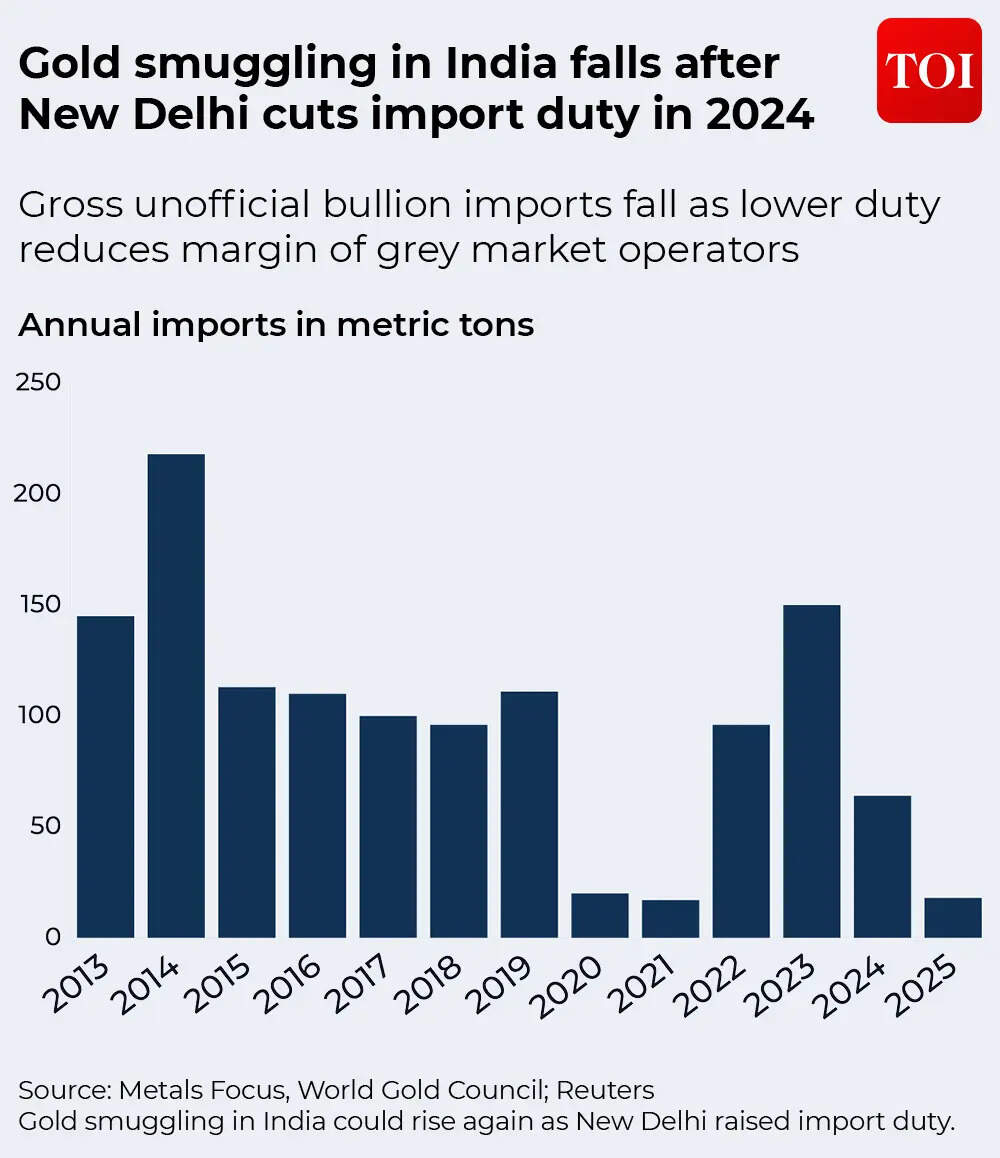
The rally in gold prices had already improved profit margins for grey market operators, and the latest increase in import duties has widened those margins to nearly 18%, compared with around 9% earlier.Unofficial gold imports had remained above 100 tonnes until 2023 but dropped sharply after India reduced tariffs in 2024. Such imports declined to 69.2 tonnes in 2024 from 156.1 tonnes in 2023, and fell further to 20.4 tonnes in 2025.The profit margin from smuggling one kilogram of gold has now climbed to a record Rs 30 lakh, increasing incentives for illegal operators in the grey market.
